Before a child can learn well, they need to feel safe. That is not a small thing. It is the foundation everything else rests on.
When parents visit a school for the first time, they notice many things. The classrooms, the teachers, the curriculum, the facilities. But there is something they are looking for beneath all of it, something they may not always put into words: whether this place will keep their child safe.
It is the most basic thing a school must offer, and yet it is not always given the attention it deserves. Safety is not just about locks on gates and cameras on walls, though those matter too. It is about the culture of care that a school builds around its students every single day.
For parents evaluating schools, knowing what to look for, and what questions to ask, makes that process far more purposeful. This is a guide to doing exactly that.
Why School Safety Measures Matter More Than Parents Often Realise
A child who does not feel safe at school cannot learn well. This is not an assumption. It is backed by decades of research in child development and educational psychology. When a child is anxious about their environment, their ability to concentrate, retain information, and engage with others is significantly reduced.
The importance of school safety measures, then, goes well beyond preventing incidents. A genuinely safe school creates the psychological conditions in which children can be curious, open, and fully present. Safety and learning are not separate concerns. They are deeply connected.
For parents of younger children especially, this connection is something they feel instinctively. A child who skips into school each morning is telling you something. So is a child who hesitates at the gate.
Physical Safety: What to Look for on a School Visit
When visiting a school, the physical environment offers a great deal of information to an attentive parent. A few things are worth looking at closely.
The entry and exit points of the school are a good place to start. A well-managed school controls who comes in and who goes out. Security personnel should be present and alert at the gates, not merely stationed there as a formality. Ask how visitors are logged, how pickups are verified, and what the procedure is when a parent arrives outside of regular hours.
CCTV coverage is another important consideration. School CCTV safety guidelines in India recommend that cameras be placed at key points across the campus, including gates, corridors, common areas, and playgrounds. At a good school, this coverage is not minimal. It is thoughtful and thorough, and school staff are able to explain how it is monitored and how footage is managed.
Beyond surveillance, look at the physical layout of the campus itself. Are common areas well lit? Are there blind spots where children could be unsupervised? Is the playground safe and well maintained? These details reflect how seriously a school takes the day-to-day safety of its students.
Supervision and the People Who Provide It
No safety feature matters more than the people responsible for a child’s wellbeing during the school day. Cameras and gates are important, but they are passive. The adults in a school, how many there are, how they are trained, and how attentive they are, are the real measure of a school’s safety culture.
For younger children in particular, the ratio of supervising adults to students is worth understanding. Young children need close attention. They cannot always articulate when something is wrong, and they rely entirely on the adults around them to notice and respond.
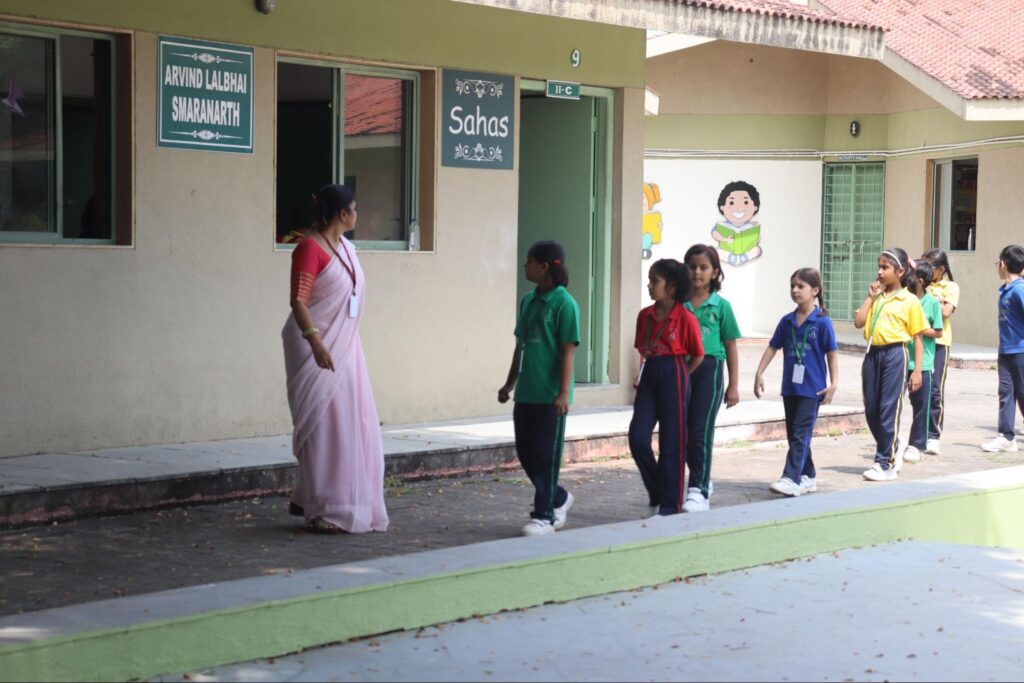
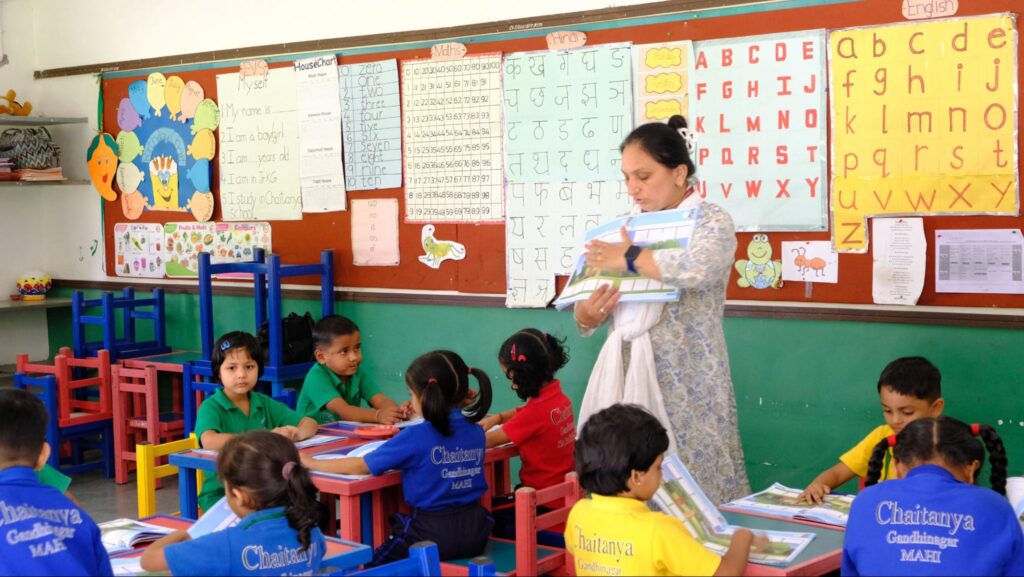
At Chaitanya School in Gandhinagar, designated didis and bhaiyas are present throughout the school day specifically to support and supervise the youngest students. This is not a token arrangement. These are trained, familiar faces who know the children in their care and who provide a consistent, reassuring presence from arrival to dismissal. For parents dropping a young child at school for the first time, this kind of human infrastructure matters enormously.
Child Safety Policies: What Every School Should Have in Place
Beyond the visible, day-to-day measures, a school’s child safety policies tell you a great deal about how seriously it takes its responsibility toward students. These are the documented frameworks that guide how staff respond to incidents, how concerns are reported, and how the school communicates with parents when something goes wrong.
When evaluating a school, parents can ask directly about these policies. A school that has clear, well-considered child safety policies will be able to discuss them without hesitation. A school that has not thought carefully about them will struggle to answer.
Key things to ask about include: how the school handles a situation where a child is injured or unwell during the day, what the protocol is if a child does not arrive as expected, how staff are trained to recognise and respond to signs of distress in students, and what the school’s communication process is with parents in an emergency. The answers reveal a great deal about the school’s culture of care.
Emotional Safety Is Part of the Picture Too
Physical safety is essential, but it is only one dimension of what makes a school genuinely safe for children. Emotional safety matters just as much, and it is sometimes harder to assess from the outside.
A school where children feel emotionally safe is one where they are not afraid to make mistakes, ask questions, or speak up when something is wrong. It is a school where bullying is taken seriously and addressed promptly, where teachers notice when a child is struggling and respond with care rather than impatience, and where every student feels they belong.
This kind of environment does not happen by accident. It is the result of deliberate choices about school culture, teacher training, and the values a school models every day. At Chaitanya, the values of Satya, Seva, and Sahas, truth, service, and courage, are part of how children are taught to relate to one another from an early age. A student who is taught to be honest and to look out for others is less likely to harm a classmate and more likely to speak up when something is not right.
How to Check School Safety Standards Before You Enrol
Parents who want to assess a school’s safety standards thoroughly have several practical options available to them. A campus visit is the most important. Walk through the school during a normal school day if possible, not just during an open house event. Notice how staff interact with students, how children move through shared spaces, and whether the environment feels organised and attentive.
Ask the school directly about its safety features and policies. A transparent school will welcome these questions. Ask about CCTV coverage, staff supervision ratios, entry and exit protocols, emergency procedures, and how the school communicates with parents. Ask what training staff receive and how often safety procedures are reviewed.
Speak with other parents whose children already attend the school. Their experience of how the school handles day-to-day situations, and how it responds when things go wrong, is among the most reliable information available to a family making this decision.
A Safe Campus as the Foundation for Everything Else
At Chaitanya, safety is not treated as a separate department or a checklist to be completed. It is woven into the fabric of how the school is run. CCTV cameras are placed at key points across the five-acre campus. Security personnel are attentive at the school gates and on the grounds throughout the day. Designated staff are present at every level to support students, and the physical environment has been developed with care and purpose by the Sree Vidya Niketan Trust.
This infrastructure exists because the school understands something that good parents understand too: a child who feels genuinely safe is a child who is free to grow. Free to be curious, to try things, to make friends, to learn. Safety is not the background condition of good schooling. It is one of its most active ingredients.
When parents ask what makes a school worth trusting with their child, safety is always part of the answer. At Chaitanya, it is an answer the school has worked to earn, year after year.
See It for Yourself
The best way to understand what Chaitanya offers is to visit the school, walk through the campus, and speak with the people who care for your child every day. We welcome all families to come and experience it firsthand.
Call: +91 98256 97797
Connect with our admissions team and schedule a campus tour.