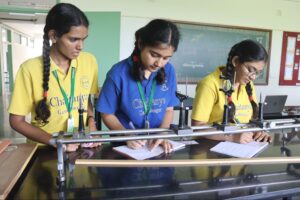
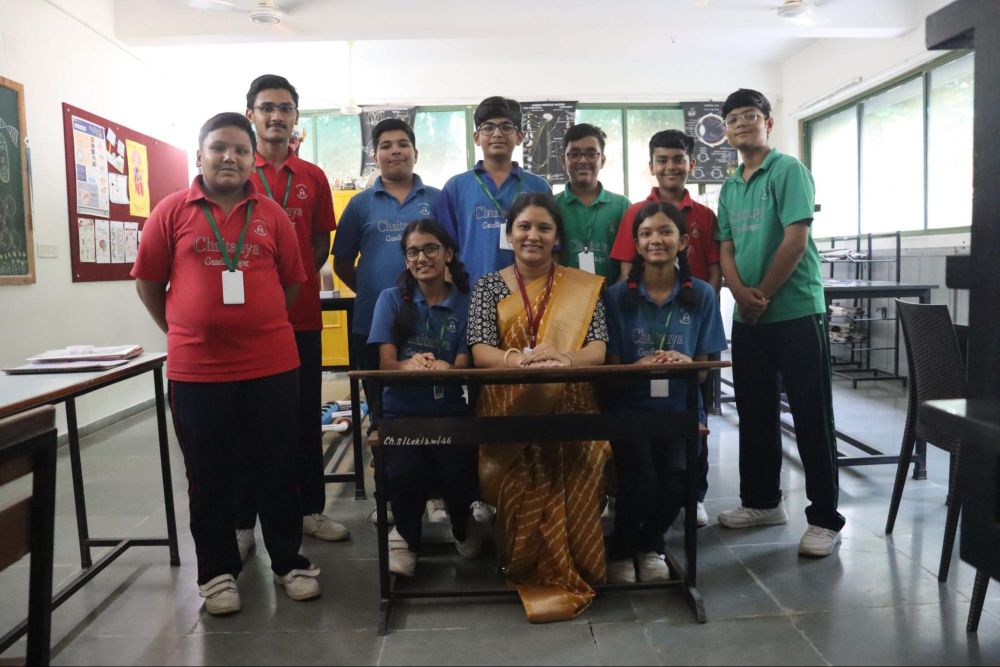
Confidence is not a personality trait that some children are born with and others are not. It is a learnable state that grows when effort meets evidence. Decades of research in motivation and learning show that when students believe they can improve through practice, they try more, persist longer, and perform better. In short, confidence changes how the brain engages with challenges. At Chaitanya School Gandhinagar, this insight guides daily teaching, classroom routines, and the way we talk to students about learning.
Why confidence matters for learning
Confidence shapes attention, effort, and emotion. A confident learner takes on a tough task as information rather than as a threat. The science points to three pillars:
- Self efficacy
Students need experiences that show cause and effect. I studied in focused blocks, I used the model, my next draft improved. This link between strategy and result builds the belief that my actions matter. - Growth mindset
When children see ability as expandable, they treat mistakes as feedback. They move from I cannot do this to I cannot do this yet. The word yet keeps effort alive. - Belonging and purpose
A sense of belonging lowers anxiety and frees cognitive bandwidth. When work feels meaningful, motivation increases and attention stays longer.
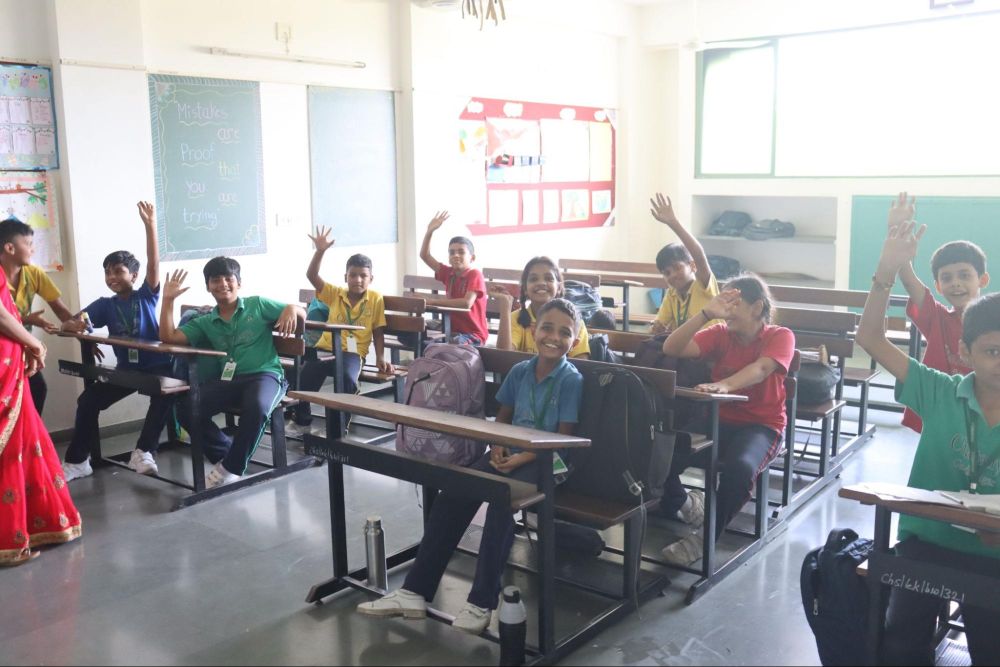
What this looks like in class
Clear goals and success criteria
Students focus better when they know what good looks like. Teachers at Chaitanya School Gandhinagar share a short objective and a checklist for success. During work time they give one precise next step. Clarity reduces worry and releases energy for the task.
Models and worked examples
Seeing a strong example reduces guesswork. In writing, a teacher may show an introduction with a claim and two linked reasons. In mathematics, a solved problem highlights the steps and the decision points. Students then try a similar task and receive quick feedback. This cycle builds both skill and confidence.
Small wins that stack
Confidence grows with visible progress. Lessons are sequenced so that students can experience a quick win early in the block, then tackle a deeper application. A short retrieval question from last week confirms memory. A pair discussion helps shape thinking. A final independent prompt lets the learner see growth.
Reflection language
Students record what changed and why. I added evidence to support my claim. I tried a number line and the calculation became clearer. These simple lines anchor strategy and boost self belief.
Feedback that builds confidence and performance
Not all praise helps. Vague praise can backfire. Effective feedback is specific, actionable, and focused on the process.
- Name the move
Instead of saying Good job, say Your diagram labels make the explanation clear. This tells the learner what to keep doing. - Point to the next action
Add one sentence to connect your example to the claim. One step keeps momentum. - Separate person from product
You are not your draft. You are improving your draft. This framing reduces fear and invites effort.
At Chaitanya School Gandhinagar, teachers use quick notes, margin prompts, and short conferences to keep feedback light and frequent. Students learn to view feedback as coaching, not as judgement.
Routines that strengthen motivation
Confidence grows in predictable environments. A few simple routines make a big difference.
- Start with retrieval
A two minute warm up that revisits key ideas signals we remember and build forward. - Plan short focus blocks
Students work in ten to fifteen minute chunks, then pause to check progress. This teaches attention as a trainable skill. - Normalize error
Teachers share common mistakes and how to fix them. The message is clear. Mistakes are information. - Show progress over time
Portfolios include early drafts and final versions. When students see their own growth, they believe effort pays off.
Language that protects self esteem and raises standards
The words we use shape how students see themselves.
- Use yet to keep doors open. You are not there yet, and here is the next step.
- Replace labels with actions. Instead of You are smart at maths, try Your use of place value helped you solve that faster.
- Pair warmth with high expectations. I know you can do this. Let us plan the steps.
This balance of care and challenge builds self esteem without lowering standards.
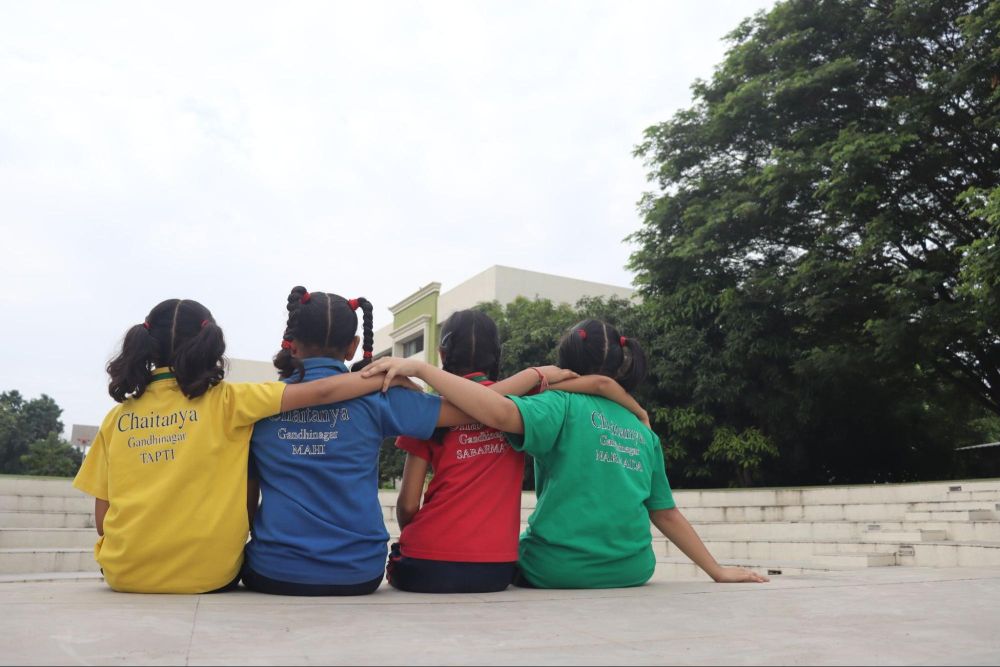
Emotional wellbeing as the base
Confidence and wellbeing support each other. Children think better when they feel safe and seen.
- Belonging routines
Greetings at the door, quick check ins, and circles build trust. Students who feel known take more academic risks. - Movement and breath
Short resets between heavy tasks calm the nervous system and restore focus. - Strength spotting
Teachers name strengths they notice. You explain ideas so others can follow. Students lean on strengths while improving weak spots.
At Chaitanya School Gandhinagar, counsellors, class teachers, and activity leads work together so that wellbeing is woven through the day, not parked in a separate slot.
Family habits that reinforce confidence
Home can mirror school messages in simple ways.
- Ask process questions. What part was tricky and how did you handle it.
- Celebrate effort and strategy. What did you try next when the first method did not work.
- Build reading and reflection into the evening routine.
- Keep a small wins journal. A line a day builds a record of growth.
These habits make confidence a shared practice, not an empty cheer.
A short checklist for teachers and students
- Do I know the goal and the success criteria
- Did I plan a small number of steps
- What strategy worked and why
- What will I try next time
- Where can I see evidence of improvement
When these questions become routine, confidence becomes the natural response to challenge.
In essence
Confidence is not magic. It is the outcome of clarity, practice, feedback, and belonging. It turns stress into focus and doubt into action. Students who see themselves as capable learners read more, write more, attempt more, and learn more. This is why confidence building is central to the academic design at Chaitanya School Gandhinagar. We want every child to leave school with knowledge, skills, and the belief that effort creates change.
Call to action
Help your child build real confidence that lasts. Visit chaitanyaschool.org or call +91 98256 97797 to connect with our admissions team and schedule a campus tour and a class observation.