“Before our son joined Chaitanya, he enjoyed maths and reading but disliked going to school. Within a term, he was staying back to try the tabla, he was volunteering in class, and he had started a small science journal at home. We saw growth in marks, confidence, and kindness. That balance is what convinced us that Chaitanya School Gandhinagar was the right choice.”…Pankaj Sahu, parent of ward in Class 3
Parents often speak about balance as if it is a soft idea. At Chaitanya, balance is a clear design for learning. The school blends strong academics with arts, sports, service, and values education. The result is a child who can solve problems, express ideas, lead with empathy, and keep curiosity alive. This is not about adding extra periods to a timetable. It is about building a culture in which varied experiences support the same goal, the full development of every child.
Academic strength that is purposeful
Academic learning is planned with clarity and care. Teachers map each unit to age appropriate outcomes, then choose methods that help students understand, not just recall. In the early years, children handle materials, read widely, and talk about what they notice. In primary classes, they move steadily into abstract thinking, but they keep returning to real contexts. A maths class may look at patterns in the school garden. A science lesson may compare water quality across taps. In middle school, projects deepen into lab reports, research tasks, and presentations that ask students to support claims with evidence. Regular practice, quick checks for understanding, and focused feedback keep progress visible and motivate effort.
Language, expression, and the joy of reading
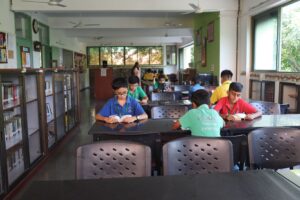
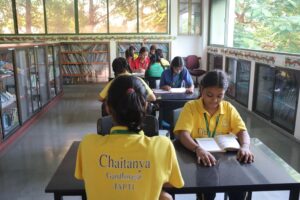
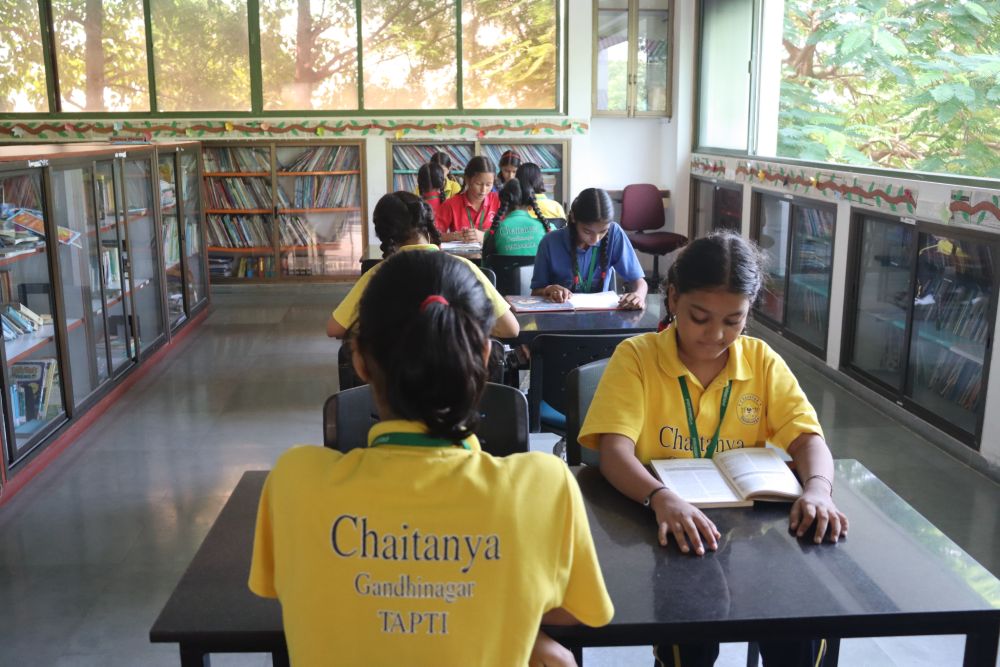
The best academic programmes strengthen language in every class. At Chaitanya, children speak, listen, read, and write across the day. Teachers use read-alouds, book talks, debates, and journal prompts to make thinking visible. The library helps this work. It is not a quiet room of shelves. It is a living space that grows with students. Picture books and reference materials sit next to travel writing and poetry. Librarians guide choice so that children read for pleasure as well as for research. A strong reading habit supports every subject because it teaches children to seek information, weigh points of view, and build ideas.
Arts that build voice and confidence
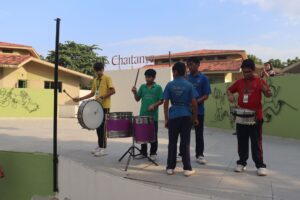
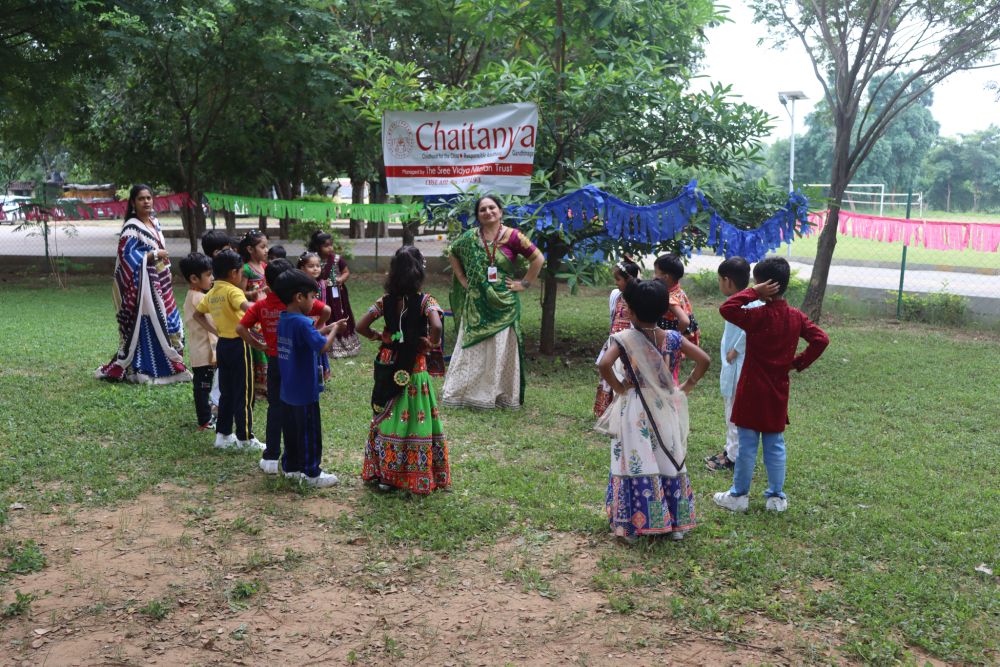
Music, movement, and visual arts are not extras at Chaitanya. They are part of how children learn to observe, to practice, and to perform. A child who rehearses a small dance piece knows how to set a goal, break it into steps, and persist. A child who paints a scene from a story learns to notice detail and to translate emotion into shape and colour. Ensemble work brings a second layer of growth. Children learn to listen, to adjust to a group, and to handle stage nerves with grace. Parents often report how arts classes unlock confidence that later shows up in class discussions and oral exams.
Sports for health, teamwork, and resilience
Regular sport builds stamina and discipline. It also builds community. On the field, students practice fair play, strategy, and communication. They learn to handle both success and disappointment, skills that matter as much as any test grade. Physical education at Chaitanya focuses on fundamentals in the lower classes, then invites children to try specialised games. Teachers keep the balance between competition and inclusion. Every child should feel the joy of movement, and many discover a life long sport along the way.
Values that anchor choices
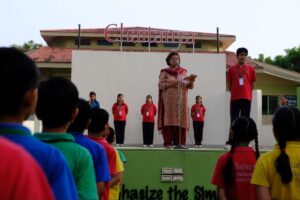
Character is taught in explicit lessons and in daily habits. Circle time builds listening and empathy. Class responsibilities teach care for shared spaces. Service activities link learning to real needs. When students visit an old age home, organise a reading drive, or design a small eco project, they see that their actions can help others. Teachers model respectful language and fairness. Leadership is shared.class representatives learn how to plan a meeting, write minutes, and follow through. Values education is not a lecture. It is the everyday practice of kindness, responsibility, and honesty.
The power of integration
The deepest learning happens when academics, arts, and values support one another. Consider a heritage project. Students research local history, draft timelines, interview elders, and map sites. In art, they create posters and displays. In music or drama, they stage a short piece based on oral stories. In “values” time, they reflect on respect for community memory and care for public places. The final showcase invites families to see both the products and the process. Children feel pride in work that has purpose beyond a grade.
Teaching that enables growth
Teachers make this balanced model possible. At Chaitanya, planning teams meet to align outcomes, methods, and assessments. Professional learning is ongoing. Faculty share student work, discuss what helped a concept click, and support one another with resources. In class, teachers use simple routines that build independence. Clear instructions, accessible materials, and chances to revisit work help every child move forward. Children see that effort and strategy lead to improvement. This mindset is the foundation of resilience.
Assessment that shows the whole picture
Balanced education needs balanced assessment. Along with tests and quizzes, teachers collect evidence from journals, portfolios, performances, and projects. Rubrics make expectations clear. Students learn to reflect on their growth, set goals, and act on feedback. Parents receive a fuller view of progress. They see academic gains and also growth in collaboration, initiative, and communication. This reduces anxiety and builds trust in the learning process.
Families as partners
Education is most effective when home and school work together. Chaitanya welcomes families into the learning journey. Orientations and class displays show how programmes work. Simple ideas help parents extend learning at home. Cook together to practice measurement. Share a read aloud and talk about the characters. Notice patterns on a morning walk. These small moments reinforce skills and values, and they build warm bonds around learning.
Why balance matters now
The world demands more than narrow expertise. Children will need to learn new tools, work with diverse teams, and act with integrity. A balanced education prepares them for this reality. Strong academics build a base of knowledge and skill. Arts and sports build expression, creativity, health, and teamwork. Values education anchors choices in empathy and responsibility. When these strands are woven together from the early years, students grow into capable, confident, and caring young people.
If you would like to see how balance feels in real classrooms, we invite you to connect with us. Visit chaitanyaschool.org to learn more or call +919825697797 to speak with our team and schedule a campus visit. We look forward to meeting your family.